Spring in Malta is a great time to start straightening your teeth, so your smile can improve in the background while you enjoy late summer weddings, holidays, and autumn events. If you are thinking about Invisalign in Malta or traditional braces, it helps to understand how each option works and how they fit into everyday life.
Both systems can give you straighter teeth and a healthier bite. The differences are mostly about lifestyle, how visible you want your braces to be, and what your mouth needs from a clinical point of view. At Signature Dental in Sliema, we work with fully digital scans and treatment planning, which makes it easier to compare options and understand what will happen before you commit.
Starting Your Smile Before Summer
Spring often feels like a fresh start. The days are brighter, social plans pick up and there are more chances for photos at barbecues, beach days and rooftop evenings. Beginning orthodontic treatment now means your teeth can start shifting into better positions by late summer and autumn, even if the full treatment will take longer.
When choosing between Invisalign and braces, think about:
- How visible you are happy for your braces to be
- Your daily routine at work, school or home
- Any upcoming events, exams or trips
- How you feel about removable vs fixed treatments
With digital scans, we can show you a clear starting point and outline a plan for moving your teeth step by step. This helps you see how your smile could look over time, which often makes the choice feel less confusing.
How Invisalign Works Compared with Braces
Invisalign uses a series of clear, removable plastic aligners that fit closely over your teeth. Each set of aligners is worn for a set period, then swapped for the next set, which is shaped slightly differently to keep your teeth moving in the right direction. These aligners are created from digital scans of your mouth, so they are made to fit you precisely.
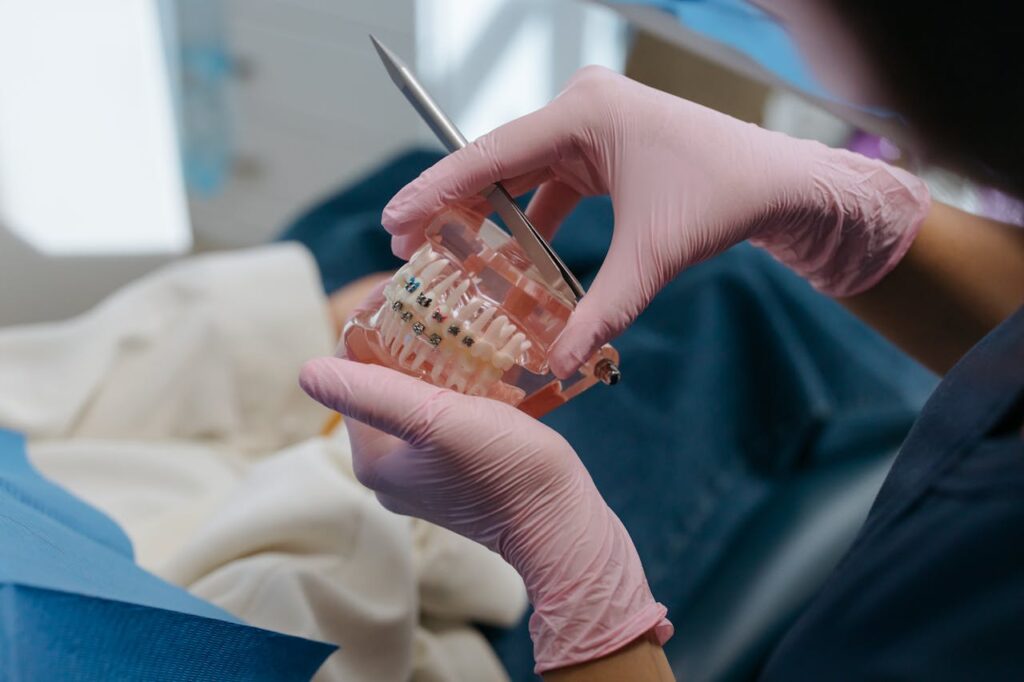
Traditional braces use small brackets that are bonded to the front, and sometimes the back, surfaces of your teeth. A wire connects the brackets and is adjusted during review visits to guide your teeth into better positions. Braces stay fixed in place, so they are always working.
A typical treatment path for both options usually includes:
- Initial consultation and clinical exam
- Digital impressions or scans of your teeth and bite
- Detailed digital treatment planning
- Fitting of aligners or bonding of brackets
- Regular review visits to check progress
At a fully digital clinic, the scanning process replaces traditional moulds, which many people find more comfortable. It also supports more accurate planning. Treatment time can vary from shorter cases to much longer ones. What matters most is how far and in what direction your teeth need to move, not simply whether you choose Invisalign or braces.
Aesthetic and Lifestyle Differences That Matter
One of the biggest differences is how your treatment looks. Invisalign aligners are clear and sit tightly over the teeth, so they are hard to see in most everyday conversations and photos. Traditional braces, especially metal ones, are more visible, though ceramic brackets can be less noticeable.
Think about your normal week in Malta, with work or school, evenings with friends and time at the seaside:
- Visibility: clear aligners can feel more discreet in photos and meetings
- Removability: Invisalign aligners come out for eating, brushing and short breaks
- Sports: braces are fixed, so a mouthguard is important for contact sports
- Social life: some people like being able to remove aligners briefly for special moments
With Invisalign, there are no food restrictions because you take the aligners out to eat. With braces, hard, sticky or very chewy foods can be a problem for the brackets and wires. Cleaning is also different. Aligners are taken out so you brush and floss as normal, then clean the trays. With braces, you brush around brackets and wires and may use extra tools like interdental brushes.
When it comes to holidays or trips, aligners can be convenient as you can switch to your next set on schedule, even if you are away, as long as you bring them with you. Braces do not rely on you changing anything at home, but you need to plan your review visits around other plans.
Suitability, Complexity and Treatment Outcomes
Both Invisalign and braces are tools to move teeth. Some concerns are simple to manage with either option. Others are more complex and need the extra control that traditional braces can offer.
In general terms:
- Mild to moderate crowding can often be treated with Invisalign or braces
- Small gaps and certain bite issues can also suit both options
- Complex rotations, very deep or open bites, and severe crowding can be better addressed with braces in many cases
Teenagers and adults have slightly different needs. Teenagers may be more active in sports or play musical instruments, so fixed brackets or removable aligners will each have pros and cons. They also need to be honest about whether they will keep aligners in for the recommended number of hours.
Adults might care more about how visible the treatment is at work or in social situations. Some adults like the control of braces that are always on, while others prefer the flexibility of aligners that they can remove.
At the end of treatment, both systems can deliver very good results when they are planned and monitored carefully. The planning skills of the dentist, along with detailed digital analysis, often have more impact on the final outcome than the brand name of the system.
Costs, Comfort and Time Commitment in Malta
People often ask which option costs more. In practice, the total fee can vary for both Invisalign and braces, because it depends on how complex your case is and how many visits, aligners or adjustments are needed. Many clinics offer ways to spread out payments, which can make treatment easier to manage.
Time in the chair also feels different between the two:
- Braces need regular wire adjustments and sometimes small extra parts
- Invisalign needs review visits, but these may be shorter
- Digital tools can help track progress and reduce unnecessary visits
With both choices, you can expect some pressure or sensitivity when braces are first fitted, wires are adjusted or you change to a new set of aligners. This feeling usually eases after the first few days. Simple steps like eating softer foods, keeping to a gentle oral care routine and planning the first few days around quieter moments in your schedule can help.
It can also be smart to time your start date around exams, important work deadlines, weddings or big social events, so your mouth is not adjusting to something new at a stressful moment.
How Signature Dental Helps You Choose Confidently
Choosing between Invisalign in Malta and traditional braces should never feel like guesswork. At Signature Dental in Sliema, we use digital scans and planning tools to show you clear images of your teeth and how they might move with different treatment paths.
During a digital orthodontic consultation, we look at:
- The health of your teeth and gums
- Your bite and jaw position
- Your lifestyle, habits and preferences
- Your budget and time expectations
From there, we explain the pros and cons of both Invisalign and braces for your specific situation. The goal is not a one-size-fits-all answer, but a plan that fits your life and gives you a smile you feel good about, through summer, autumn and beyond.
Start Your Discreet Smile Transformation Today
If you are ready to straighten your teeth without fixed braces, we can help you plan a clear, comfortable treatment journey with Invisalign in Malta. At Signature Dental, we take time to understand your goals, assess your smile and create a personalised treatment plan that suits your lifestyle. Book a consultation with our experienced team so we can discuss your options and guide you through every step towards a more confident smile.